
The Best Portable Chargers of 2026
A dead phone is a solvable problem. Here are the power banks actually worth buying.

Our Top Picks
Best for Most People: Anker Nano Power Bank (10K, 45W) — $50 on Amazon
Best Budget Pick: INIU 10,000mAh Portable Charger — $20 on Amazon
Best for iPhone (MagSafe): Anker MagGo Power Bank (10K, Qi2) — $72 on Amazon
Best for Laptops: Anker Laptop Power Bank (25K, 165W) — $135 on Amazon
Best for Backpacking: Nitecore NB10000 Gen 4 — $84 at Nitecore Store
Best for Most People: Anker Nano Power Bank (10K, 45W, Built-In Retractable USB-C Cable)
$50 on Amazon
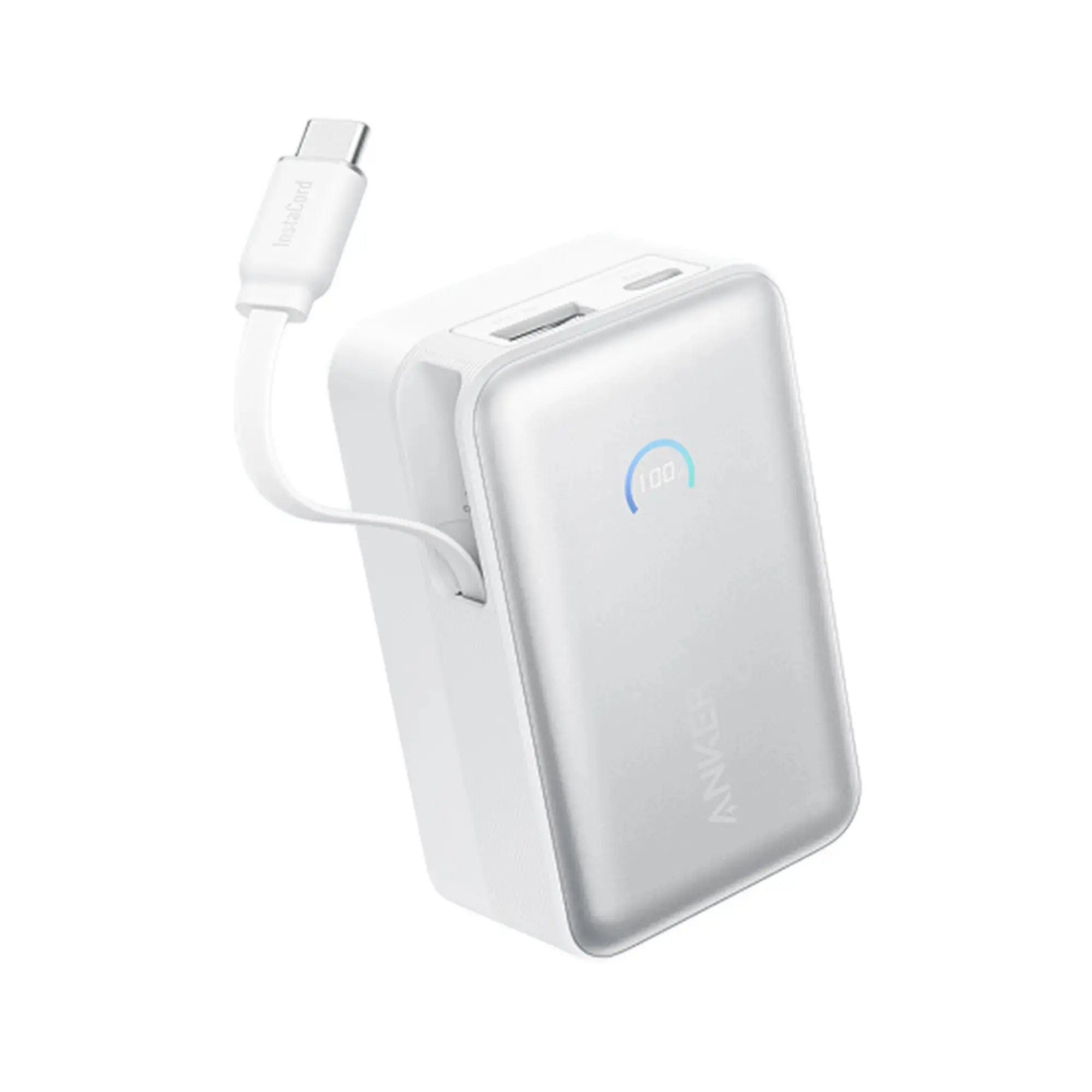
The Anker Nano Power Bank (10K, 45W) is the portable charger most people should buy. It packs a 10,000mAh battery with 45W fast charging, pass-through technology, a smart display, and a built-in retractable USB-C cable into a body that measures just 3.21 × 1.99 × 1.42 inches and weighs 8.2 ounces. That’s roughly the size of a deck of cards.
The retractable cable is the standout feature here. The 2.3-foot cord is tucked inside the unit and rated for over 20,000 bends, so you can leave your charging cable at home entirely. Just pull the cable out, plug in your phone, and the spring-loaded spool retracts the slack when you’re done. No more tangled cables rattling around the bottom of your bag.
Charging speed is genuinely impressive. Anker claims it can recharge an iPhone 17 Pro Max to 40% in 20 minutes using 40W output. And when it’s time to refuel the power bank itself, a 30W input gets it back to full in about two hours. It also supports pass-through charging, meaning you can charge the power bank and your phone from a single wall outlet at the same time — a lifesaver in hotel rooms with one available plug.
The unit also includes a USB-C port and a 22.5W USB-A port in addition to the built-in cable, so you can charge up to three devices at once. Keep in mind that when using multiple ports simultaneously, the total output drops significantly — max single-port output is 15W when using two ports and 7.5W per port when using all three.
The small color display on the front shows remaining battery percentage, current input/output wattage, and estimated time to full charge, replacing the vague four-dot LED indicators on older power banks. It retails for $59.99 and is available in black, white, green, and pink. It frequently goes on sale in the $40–$50 range.
Best Budget Pick: INIU 10,000mAh Portable Charger (Ultra Slim, 45W)
$20 on Amazon
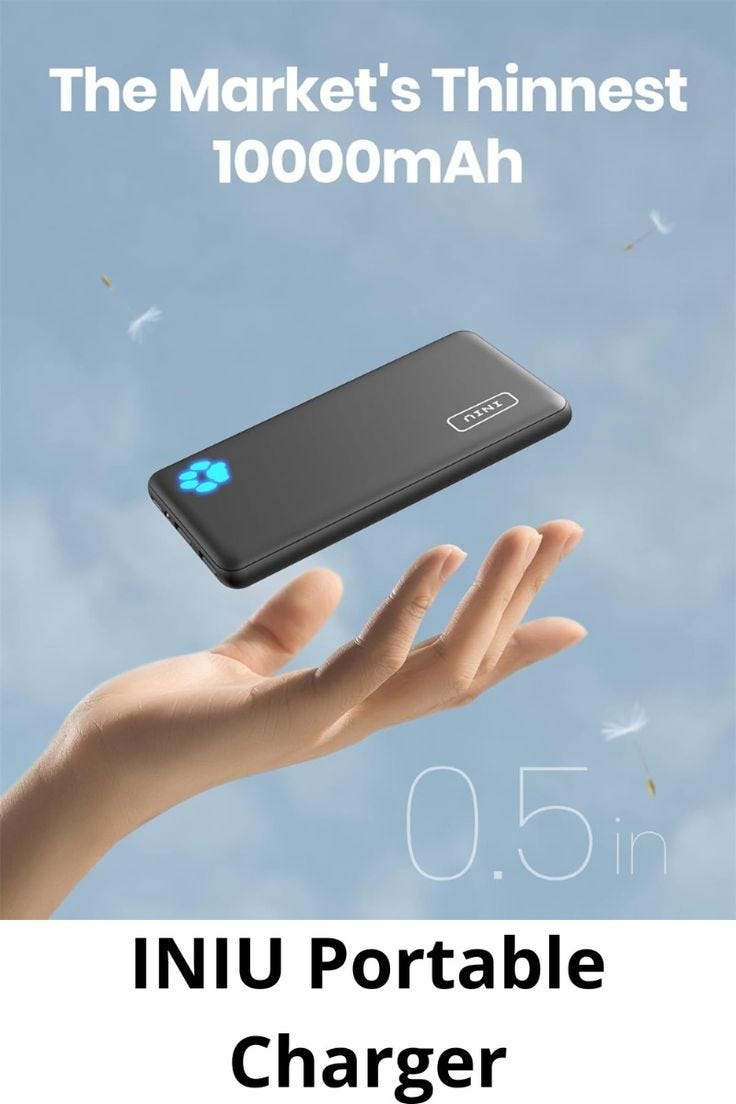
If you just need a reliable backup battery and don’t want to spend more than the cost of a nice lunch, the INIU 10,000mAh is the pick. At $20, it provides dependable portable power in a lightweight, slim form factor that meets FAA requirements for carry-on luggage.
The design is thin and rubberized, making it comfortable to hold and resistant to scratches. A built-in USB-C cord doubles as a quick-clip lanyard that you can attach to a purse, backpack strap, or belt, freeing up your hands. It’s not as elegant a cable-management solution as Anker’s retractable mechanism, but it gets the job done.
INIU includes dual USB-C ports (both input and output) plus a USB-A port, allowing you to charge up to three devices simultaneously. The 45W output can charge newer smartphones surprisingly quickly — INIU claims an iPhone can go from 0 to 60% in about 25 minutes. That’s fast charging territory at a budget price.
The trade-offs are predictable at this price point: there’s no display (just a basic LED indicator), the build quality isn’t as premium as Anker’s, and you won’t get the same long-term brand support. But INIU does offer an industry-leading 3-year warranty, which is unusual for a $20 product. If you’re the type who leaves chargers in Ubers or needs to outfit the whole family, buy three of these for the price of one Anker Nano.
Best for iPhone (MagSafe): Anker MagGo Power Bank (10K, Qi2)
$72 on Amazon
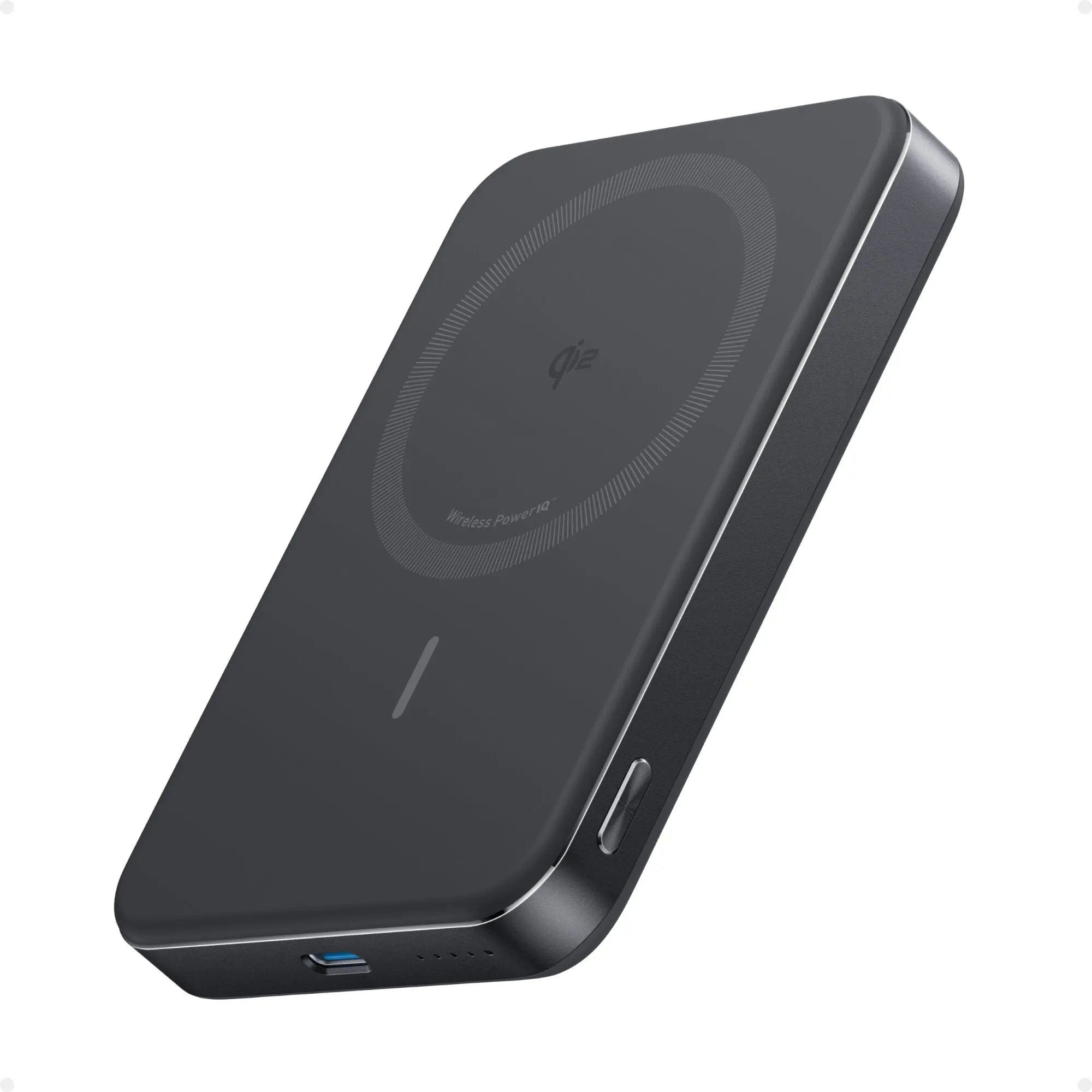
For iPhone owners who want to ditch cables entirely, the Anker MagGo Power Bank snaps magnetically onto the back of any MagSafe-compatible iPhone and charges it wirelessly. No cable, no fumbling, no thought required.
The MagGo delivers 15W of Qi2-certified wireless charging, and its 10,000mAh capacity provides enough juice to charge a base iPhone 17 nearly twice or an iPhone 17 Pro Max at least once. The magnets are strong — strong enough to hold securely even through a MagSafe-compatible case while walking around.
The built-in foldable stand is a nice bonus. You can prop up your phone for hands-free viewing while it charges, which is useful at airports, on desks, or in bed. A smart display shows battery percentage and estimated recharge time, and a 27W USB-C port provides a wired charging option when you need maximum speed.
The main caveat is that wireless charging is inherently slower than wired and generates noticeable heat during extended sessions. If raw speed is your priority, you’ll want to use the USB-C port. It’s also worth noting that this is primarily designed for MagSafe iPhones — many Android phones, including most Samsung and Pixel models, won’t magnetically snap on without a separate Qi2-compatible case.
At around $72 (regular price $90, frequently on sale), it’s not cheap. But the convenience of cable-free, snap-on charging is a genuine quality-of-life improvement for iPhone users who are tired of carrying cables.
Best for Laptops: Anker Laptop Power Bank (25K, 165W)
$135 on Amazon
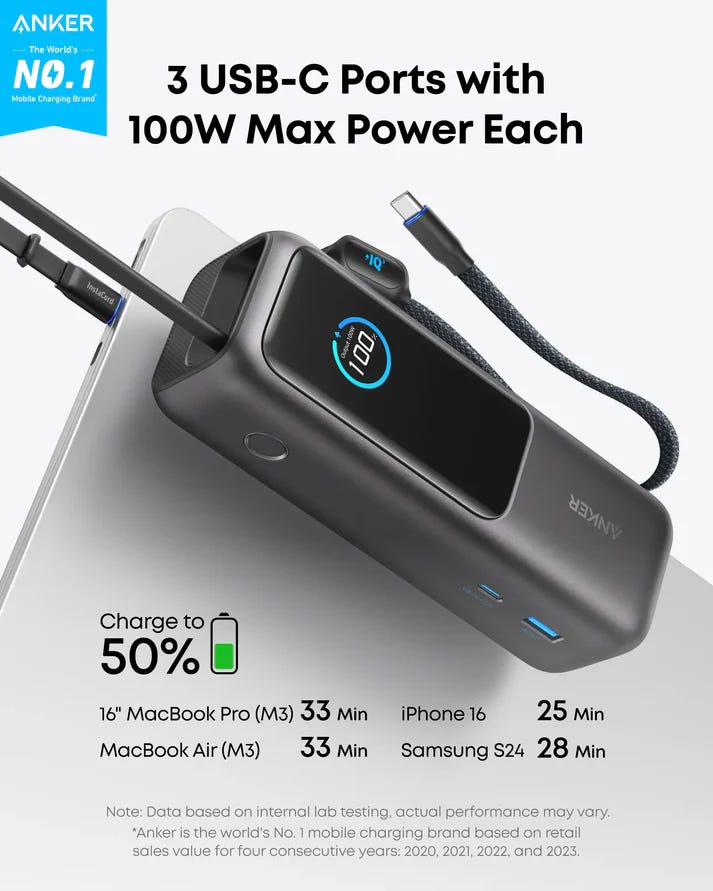
Most portable chargers top out at 30W or so — enough for phones, but not enough to meaningfully charge a laptop. The Anker Laptop Power Bank changes that with triple 100W USB-C ports and a 25,000mAh capacity, plus dual built-in USB-C cables — one retractable (up to 2.3 feet) and one that doubles as a carrying strap.
In practice, this means you can charge a MacBook Air about 1.5 times from a single charge, or keep a MacBook Pro running during a long flight. It can charge up to four devices simultaneously using the two built-in cables, the USB-C port, and a USB-A port. The built-in cables are a huge convenience for travelers — they eliminate the risk of forgetting a cable at home or in a hotel room.
The 90Wh capacity sits just under the 100Wh limit that most airlines set for carry-on batteries, so it won’t cause problems at airport security. It’s heavier than a phone-only power bank at about 1.3 pounds, but if you’re already carrying a laptop bag, you’ll barely notice it.
The regular price is $135, though it frequently drops to the $96–$105 range during Amazon sales. It’s currently 29% off as part of the Amazon Spring Sale. For digital nomads, frequent flyers, and anyone who works from coffee shops, this is the one to get. If you only charge phones, it’s overkill — stick with the Nano.
Best for Backpacking: Nitecore NB10000 Gen 4
$84 at Nitecore Store
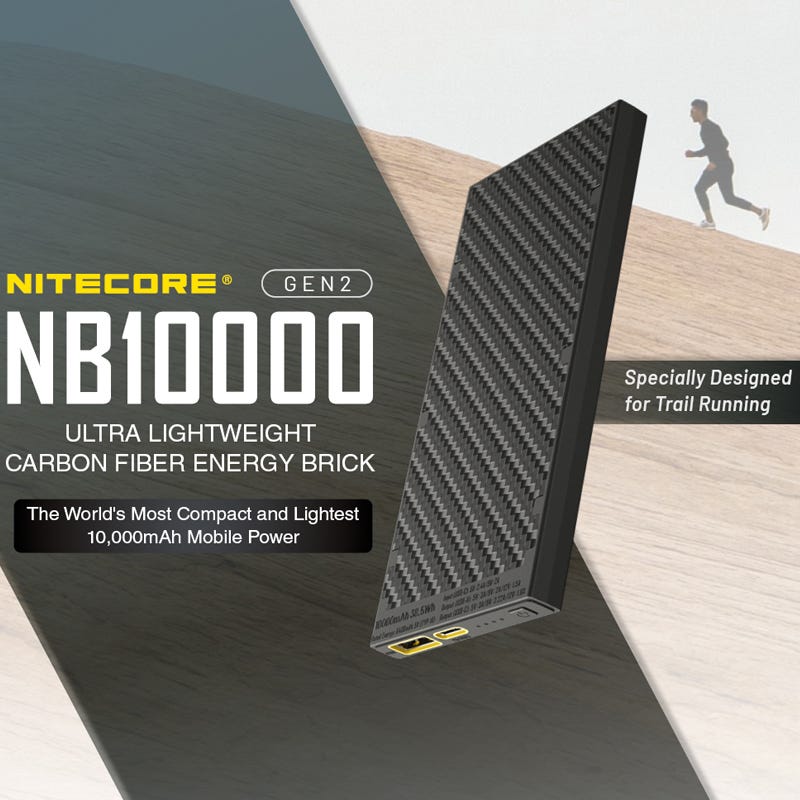
When you’re counting ounces on the trail, the Nitecore NB10000 Gen 4 is the power bank to beat. It weighs just 5.35 ounces with its included lanyard and cable — roughly the weight of a single energy bar — while still packing the full 10,000mAh capacity you need for a weekend trip.
The Gen 4 uses silicon-carbon battery cells that store more energy than typical 10,000mAh power banks, delivering 39Wh of capacity compared to the usual 37Wh. That may not sound like much, but when every watt-hour matters in the backcountry, it adds up.
Durability is where this power bank really separates itself from the pack. It features IPX7 water resistance, meaning it can handle rain, wet tents, and brief submersion — a critical feature that most mainstream power banks lack entirely. The body is reinforced with carbon fiber sheets and a flame-retardant composite frame. A reviewer who field-tested it on the Knobstone Trail in temperatures ranging from 65°F down to 30°F reported zero issues.
The Gen 4 adds a knock-to-wake function and RGB positioning lights so you can check battery status and find your ports in the dark without fumbling, which is a thoughtful touch for tent-based charging sessions. Dual USB-C ports with 22.5W fast charging round out the spec sheet.
The catch is price and availability. At $84, it costs significantly more than mainstream 10,000mAh power banks, and the Gen 4 isn’t yet widely available on Amazon (the Gen 3 sells there for about $99, but the Gen 4 is currently sold through Nitecore’s store and outdoor retailers like Zpacks and Garage Grown Gear). For hikers and backpackers who treat every gram as sacred, that premium is easy to justify.
What to Know Before You Buy
Capacity (mAh) determines how many charges you’ll get. A 5,000mAh power bank gives most phones roughly one partial charge; 10,000mAh is the sweet spot for two to three phone charges; and 20,000mAh or more enters laptop territory. Keep in mind that real-world output is always lower than the rated capacity — expect about 60–70% of the advertised mAh to reach your device, due to energy lost as heat during voltage conversion.
Wattage determines how fast your device charges. Basic power banks offer 12–18W, which is fine for a slow overnight top-up. For meaningful fast charging on modern phones, look for 30W or more. Laptops generally need 65W or higher.
TSA rules allow power banks rated at 100Wh or less in carry-on luggage — all five of our picks fall under that limit. Power banks cannot go in checked bags.
Built-in cables have become a must-have feature. The Anker Nano and Laptop Power Bank both include integrated cables that eliminate the single most common portable-charging annoyance: forgetting to pack a cord. If a power bank doesn’t have one, make sure you always stash a USB-C cable in the same pocket.